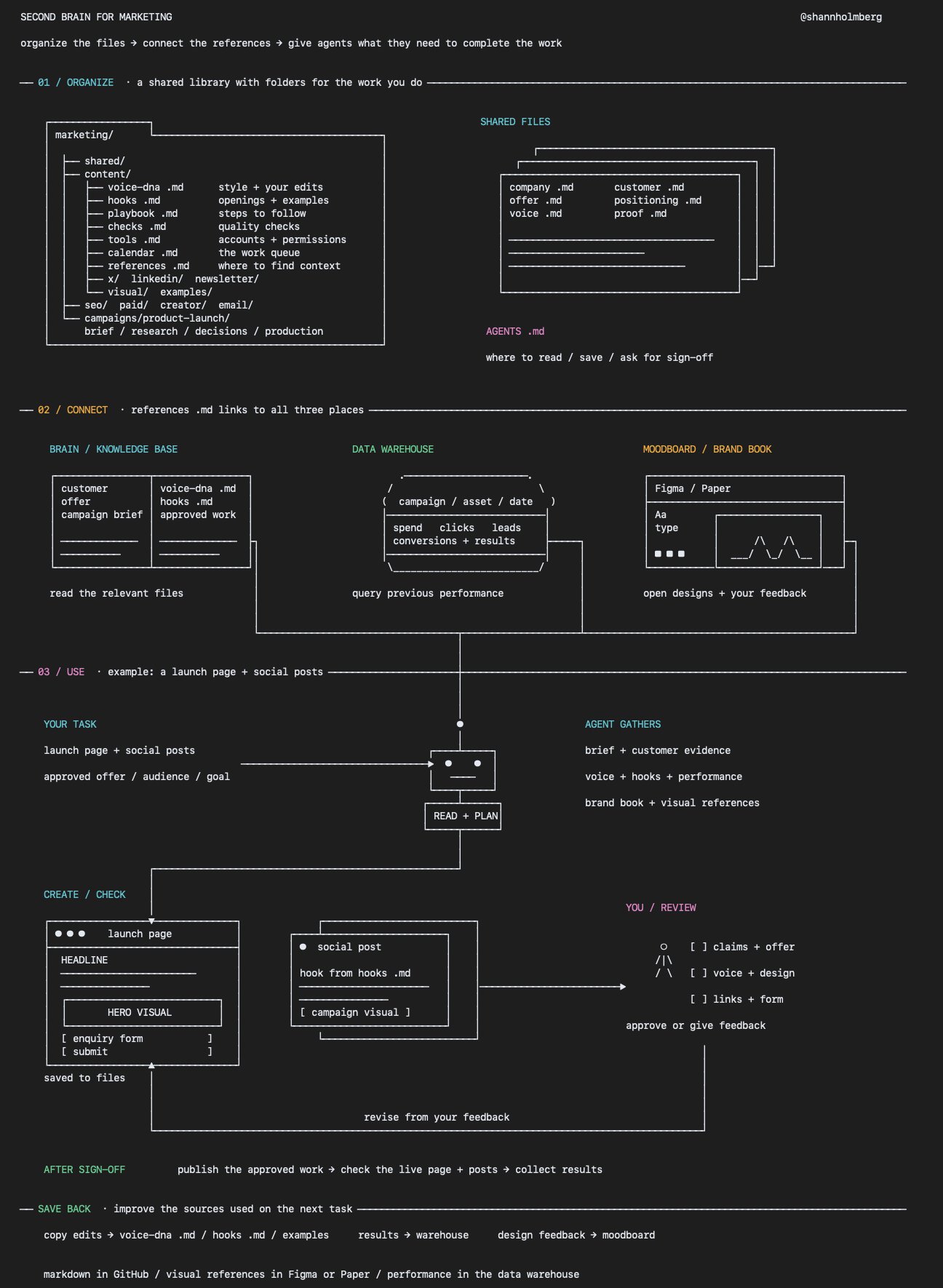
every marketing engineer needs a knowledge base, a second brain
a central place for files that contain all the information, data, examples and instructions your agents need to produce quality work
here is how to organize it for marketing:
1. start with the files every marketing team needs
> company .md: what the business does and who it serves
> customer .md: customer problems, buying triggers, objections and their own words
> offer .md: what you sell, pricing, deliverables and promises you can support
> positioning .md: why someone would choose you over the alternatives
> voice .md: how you write, with examples and phrases to avoid
> proof .md: case studies, approved claims and links to the evidence
build these from material you already have: sales calls, proposals, customer interviews, website copy and previous campaigns
for voice .md, include your edits. an approved post helps, but explaining why you changed the opening gives the agent something specific to apply
2. create a folder for each marketing function
content, SEO, paid, creator marketing and email all need different instructions
inside each folder, keep:
> playbook .md: how the work gets done
> examples/: approved work and rejected versions, with your feedback
> tools .md: which tools and accounts agents can use
> checks .md: what to check before returning the work
> calendar .md: what's planned, in progress and ready for review
reference the shared files when needed. if you change the offer, every team should be able to find the current version
3. organize content by platform
an X post, a newsletter and a LinkedIn post need their own examples and writing guidance
content/
├── playbook .md
├── checks .md
├── tools .md
├── calendar .md
├── x/
├── linkedin/
├── newsletter/
└── visual/
inside each platform folder, save the formats you use, examples you've approved and drafts you've rejected
4. give agents visual references to work from
keep a moodboard and brand book in Figma or Paper, with links in visual/
> moodboard: references for the look you want, with notes on what you like about them
> brand book: colors, fonts, logos, layouts and rules for using them
> approved examples: previous ads, landing pages and campaign assets
give the agent access to those files when it creates visuals, and save your design feedback alongside the references
5. give each campaign its own folder
campaigns/product-launch/
├── brief .md
├── research/
├── decisions .md
├── production/
└── results .md
the brief holds the goal, audience, offer and constraints for that campaign
decisions .md records what you've agreed on and why. if you reject an angle or change the offer, save the decision there
agents working on the landing page, emails and social posts can then use the same approved direction
6. connect your performance data using a data warehouse
a data warehouse stores performance data from your marketing tools in one place your agents can query
connect your ad platforms, website analytics, sales tools and content accounts to collect spend, clicks, leads, conversions and campaign results
the marketing folders can hold campaign reports and your interpretation of the results, with links to the data behind them
for a new campaign, an agent can read the previous brief, inspect the assets and check how they performed
include the reporting period and metric definitions so it can make a useful comparison
7. explain how agents should use the folders
add an AGENTS .md file with instructions for working in the knowledge base
> where to find the relevant files
> which sources to trust
> where to save drafts and research
> how to flag conflicting information
> which changes need your sign-off
give the agent the files it needs for the task you're asking it to do
8. save what you learn while doing the work
when you correct a draft, update the writing instructions or examples
when a campaign reveals a new customer objection, add the evidence to customer .md
when an offer changes, update offer .md and flag the active campaigns affected
I'd keep the markdown files in GitHub so changes can be reviewed and traced back to whoever made them, with large creative files linked from shared storage
start with one marketing function and a task you're already doing